


In an period the place paparazzi movies pattern inside minutes and celeb sightings turn into prompt content material, the thought of a “typical workday” not applies. For Mumbai’s paparazzi, the day doesn’t start with a hard and fast routine or finish with a transparent sign-off. It begins early, stretches late into the evening, and is dictated totally by motion, intuition, and probability.“There isn’t a fastened routine. The day begins early and ends late. You’re continually monitoring actions, coordinating with individuals, ready at areas, transferring from one place to a different. It’s not nearly clicking footage — it’s about being alert on a regular basis,” say paparazzi veterans Yogen Shah and Viral Bhayani, talking to ETimes.From airports to movie studios, gyms, eating places, and residential lanes of Bandra, Andheri, Juhu, and past, paparazzi function in a state of everlasting readiness. Each location has its personal rhythm. Airports supply predictability, occasions include planning, however most celeb appearances are unscheduled and fleeting.“There’s no such factor as a ‘typical’ day,” Bhayani explains. “Airports are totally different, Bandra is totally different, Andheri is totally different, Juhu is totally different. Occasions have a separate group altogether as a result of these are deliberate prematurely. Most celeb moments are spontaneous.”
Spontaneity over scheduling
Opposite to well-liked perception, celebrities don’t alert paparazzi earlier than stepping out. There aren’t any advance calls, no secret messages.“No actor calls us saying, ‘I’m coming, please click on my images.’ If Virat Kohli is coming, he’s not going to cellphone me,” Bhayani says. “For those who’re fortunate and you see them, you seize the second naturally. That’s how this occupation works.”That unpredictability is each the joys and the strain. Miss a second, and it’s gone — probably picked up by another person or misplaced totally. Whereas occasions are pre-planned, on a regular basis celeb recognizing relies upon closely on consciousness, instinct, and being in the suitable place on the proper time.“It’s a combination. Occasions are deliberate, however celeb recognizing is 90% luck and consciousness,” Bhayani provides. “You need to be alert on a regular basis. For those who miss a second, it’s gone perpetually.”
The invisible contract: occupation versus privateness
Essentially the most misunderstood side of paparazzi tradition is the steadiness between entry and intrusion. For Yogen Shah, that line is non-negotiable.“That line is extraordinarily essential. I’ve authorized information of what I can click on and what I can’t. Primarily based on that, I take pictures,” he says.He factors out that celebrities are absolutely conscious of the aim behind {a photograph} or video — whether or not it’s for social media, publication, or information protection. The interplay, he insists, is skilled on each side.“Celebrities could not know our names, however they recognise our faces and our cameras. They know we’re professionals.”The actual failure, in response to Shah, is when a celeb regrets consenting to being photographed.“The worst scenario could be if later a celeb feels, ‘Why did I permit this? I shouldn’t have.’ That ought to by no means occur after seeing the ultimate end result.”
When celebrities say no
There are moments when actors refuse to be clicked — and paparazzi say that’s totally acceptable.“After all. And that’s fully human,” Shah explains. “If a celeb says, ‘Not now, I’m not snug,’ we respect that.”He attracts a easy analogy: simply because somebody declines as soon as doesn’t imply one thing is improper.“At residence, your mom serves meals day-after-day, however in the future you could say, ‘I’m not hungry as we speak.’ That doesn’t imply something is improper.”On the identical time, Shah acknowledges the fragile steadiness media operates below.“Publications contain tons of of individuals. If everybody stops giving images, the publication gained’t run. So there needs to be steadiness and understanding on each side.”Bhayani additionally stresses that boundaries are non-negotiable.“You have to draw a line. If somebody says no, you respect it. We don’t boycott celebrities in the event that they refuse. That’s improper,” Bhayani says.For paparazzi, the job typically continues even when the topic leaves. “Our work is our faith. If somebody needs to go residence, they go. We keep. As a result of if the job doesn’t get performed, we will’t sleep. This era needs the whole lot quick, however persistence is the whole lot on this subject,” he provides.
No tantrums, no threats
Regardless of working with among the strongest names within the nation for many years, Shah says disrespect is uncommon.“You meet people who find themselves a thousand occasions larger than you — in wealth, affect, fame — but they by no means disrespect you.”Celebrities, he notes, don’t impose situations whereas being photographed.“By no means. In the event that they don’t like one thing, they name politely via PR or message instantly and say, ‘I didn’t like this half.’ That’s it. No shouting. No threats.”
Three a long time behind the digicam

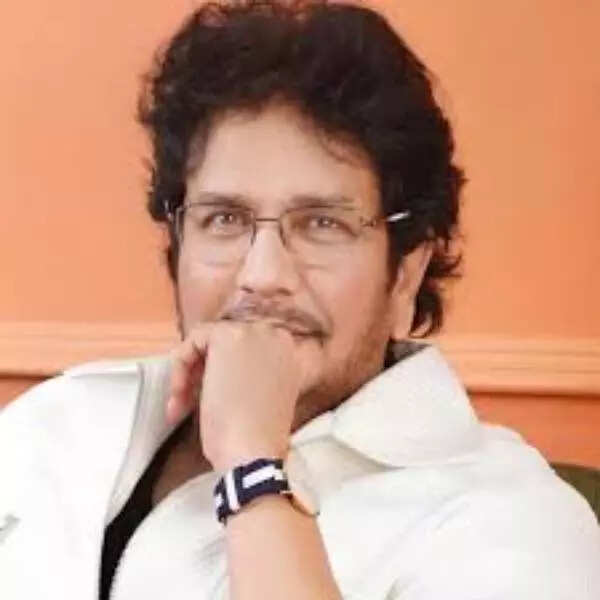
Yogen Shah’s journey mirrors the evolution of leisure journalism in India. He started as a freelancer with The Instances of India in 1992, a time when the media panorama was way more restricted.“Again then, The Instances of India was the whole lot. There have been no a number of branches. Every thing occurred within the CST constructing,” he recollects.Bombay Instances’ Web page 3 didn’t initially characteristic movie pictures — that modified with Shah’s work. Mumbai Mirror’s first problem carried his photos. ETimes, which started as a TV journal, additionally featured his pictures in its early days.“For me, The Instances of India is a temple,” he says.Bodily, paparazzi work is exhausting. Mentally, it’s relentless.“I can’t train correctly,” Shah admits. “My coach comes residence and sits for hours as a result of I preserve getting calls. A exercise meant for one hour takes 5 hours.”The psychological load is heavier.“One shoot at 5 pm. One other at 6:30 pm. A photographer caught in site visitors. Lacking one image impacts ten publications. That strain by no means leaves your thoughts.”Regardless of residing cinema every day, Shah’s relationship with films stays deeply private.“Watching one movie every day is my emotional meals,” he says.Unable to take a seat via theatrical screenings resulting from fixed distractions, he constructed two theatres at residence. But the thrill stays intact.“Even as we speak, I get up pondering, ‘I’ll watch a film as we speak.’ That childlike pleasure retains me alive.”
From movie rolls to digital overload: how the occupation has developed
The paparazzi ecosystem as we speak is unrecognisable from when Bhayani started. What was as soon as slower and financially modest has turn into high-investment, high-stress and hyper-competitive.“Earlier, life was slower and easier. It wasn’t financially robust, nevertheless it wasn’t mentally exhausting both,” he recollects.“Once I began, I didn’t even personal an SLR digicam. My junior had one, I didn’t. Shopping for an SLR was an enormous deal.”That turning level got here unexpectedly. “I earned that cash by promoting Shilpa Shetty’s images when she grew to become well-known internationally after Large Brother. She actually helped construct my profession.”Right this moment, the size has exploded. Cricket, Bollywood, enterprise leaders and influencers all occupy the identical visible economic system. “The market is big. Occasions have multiplied. To cowl the whole lot, you want a giant group, which implies heavy funding,” he explains.


Apparently, paparazzi work was by no means a part of Bhayani’s unique plan. His entry into the sphere was unintended, pushed by circumstance somewhat than ambition.“No. I needed to work in PR. I gave CAT exams however couldn’t crack English or Maths. MBA didn’t work out,” he admits.As a substitute, he leaned into content material. “I targeted on storytelling. I labored globally, particularly for the NRI market, the place cash was higher. I dealt with the whole lot myself—images, articles, structure concepts. I used to be a one-man present.”That adaptability, he says, is what saved him afloat. “I introduced content material, photos, tales, and even advertisements. That’s how I survived and grew.”
Social media judgment and self-correction
Within the social media age, paparazzi are scrutinised as a lot because the celebrities they {photograph}. Shah believes self-evaluation is essential.“If I used to be late delivering a photograph, I’m improper — I settle for it.”Random criticism, nevertheless, have to be filtered.“Folks will like, dislike, remark — that’s a part of the job.”For him, the viewers in the end decides the worth of his work.“My favorite pictures are those individuals love. I work for individuals. Their response decides what issues.”
Greater than cash
Would he advocate paparazzi work as we speak?“Sure — however not for cash alone,” Shah says firmly.He recollects how, in the course of the lockdown, many celebrities supported photographers financially with out being requested.“That tells you the whole lot.”One second that stayed with him was a current encounter involving Rashmika Mandanna.“A boy was standing far-off. She herself referred to as him nearer and hugged him — with out excited about standing, hygiene, cameras, something. That’s blessing power.”
The price of sacrifice
For Viral Bhayani, the most important worth of the occupation is private.“Endurance. And sacrifice,” he says.“You sacrifice household time, birthdays, anniversaries, holidays — the whole lot. I’ve by no means celebrated birthdays or anniversaries. Leaves don’t exist in our dictionary.”The work calls for fixed psychological agility.“This isn’t a job for gradual or lazy individuals. You want creativity, pace, sharpness, and stamina — all collectively.”
Well being, self-discipline, and onerous classes
Bhayani admits to ignoring his well being early on.“Unhealthy meals, no fastened meals, heavy digicam luggage, travelling in native trains — it destroys your physique.”Right this moment, he insists on self-discipline inside his group: eat clear, train, keep away from alcohol, and prioritise psychological well being.“You look ahead to six hours, and the actor says no. You don’t know what they’re coping with. You have to management your ego and feelings.”
Fame, enterprise, and misconceptions
With large social media followings, paparazzi pages have turn into companies.One of many largest misconceptions round paparazzi work is the belief of fastened charges and uniform earnings. In line with Viral Bhayani, nothing in regards to the enterprise is standardised.“There’s nothing fastened. Everybody decides their very own pricing. It depends upon your web page’s attain—somebody has 50 million followers, somebody has 20 million. Manufacturers resolve based mostly on ROI. If one put up reaches one million individuals, the funding is sensible. That is enterprise, identical to newspapers run on advertisements.”Within the social media period, paparazzi work sits on the intersection of journalism, content material creation and digital advertising. Attain determines worth, visibility drives income, and consistency retains the system working—very similar to legacy media fashions, solely quicker and way more unforgiving.But the most important false impression persists.“That we’re intrusive. We’re not. If somebody complains, we alter our strategy instantly.”
Consistency is the whole lot
Bhayani recollects being pushed apart by PR groups in his early days.“They wouldn’t even let me stand close to occasions. Right this moment, the identical individuals invite me personally.”From standing in ticket queues and shopping for black tickets to evaluate movies, to no longer moving into theatres in any respect, the journey has been lengthy.“Life modifications — however provided that you keep constant.”
No hierarchy, solely gratitude
Each photographers agree on one philosophy: there aren’t any large or small stars.“Each star who offers me {a photograph} is equal,” Shah says. “My livelihood exists due to them.”For these romanticising paparazzi life, Bhayani affords a actuality verify.“Be ready for onerous work, persistence, and sacrifice,” he says, itemizing the non-negotiables: alertness, sharp pondering, pace, and communication abilities.“For those who’re not disciplined, don’t enter this subject.”For paparazzi, the digicam often is the device — however humility, persistence, and self-discipline are the true forex.And in a metropolis that by no means stops watching, they by no means cease working.