


One film character stands above the remainder when it comes to his significance to the martial arts style, if for no different motive than the variety of memorable movies he is been part of. And that is not due to a single, long-running franchise, however as a result of many various martial arts filmmakers throughout totally different eras determined to convey him to life on the large display screen – to superb leads to a number of cases.
The character in query is Wong Fei-hung, an individual who existed in actual life. Films and TV exhibits have been bringing their very own variations of his life story to the display screen for many years, going all the way in which again to the Forties. Admittedly, many of those variations have been forgettable, whereas others have been masterpieces.
Over time, a protracted record of martial arts films – largely ones produced in Hong Kong – featured Wong Fei-hung as the principle character.
Wong Fei-hung Was A Actual-Life Kung Fu Grasp
Wong Fei-hung was a prestigious, Nineteenth-century martial artist based mostly in China’s Guangdong Province. Born in 1847, he was the son of a well-respected doctor named Wong Kei-yung, one of many area’s best-known specialists in Hung Gar kung fu and a member of a bunch of martial arts masters extensively generally known as the Ten Tigers of Kwantung.
Like Wong Fei-hung himself, his father and the opposite members of the Ten Tigers of Kwantung have been the themes of a number of kung fu films over time.
From his father, Wong Fei-hung discovered each kung fu and medication, permitting him to hold on Wong Kei-yung’s legacy as a doctor and a martial arts grasp. Along with his expertise, he was in a position to function martial arts faculties within the Guangdong Province, sharing his data with a protracted record of soon-to-be kung fu specialists.
Over the course of his life, Wong encountered a number of martial arts specialists, selecting up varied concepts and including them to his arsenal alongside the way in which. One approach specifically – the Shadowless Kick – turned his signature transfer, and one which performs an enormous position in lots of his films.
Resulting from his fame and alleged prowess in martial arts, Wong Fei-hung turned an enormous folks hero. A large number of tales have romanticized his life, making him a power for justice in opposition to the Japanese and the British within the early twentieth century. Resulting from all of the legends that encompass Wong’s life, a lot of what he really did and did not do has been misplaced to historical past.
It is partially for that motive that Wong Fei-hung’s life story has been considerably of a fountain of tales for Hong Kong studios. All of the tales relating to his previous has lended all of them kinds of various instructions they will take a Wong Fei-hung film, which means that they do not should repeat the identical tales audiences are already familar with.
Wong Fei-hung Was The Principal Character In A number of Of The Finest Martial Arts Films

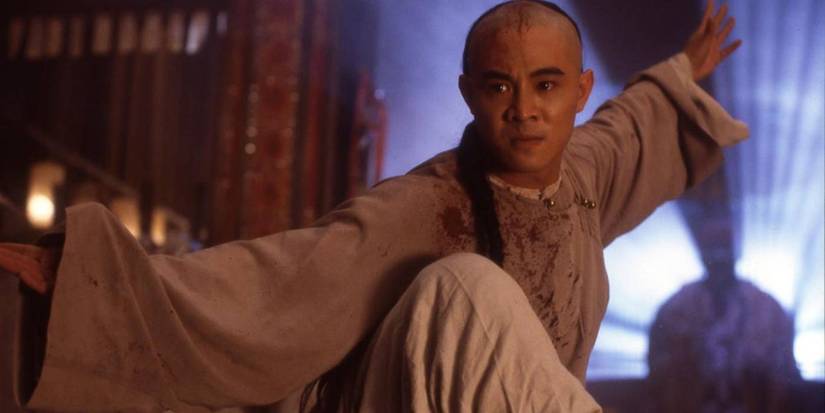
Due to his legendary standing in China, Wong Fei-hung was among the many hottest choices for a lead character in a kung fu interval piece produced by a Hong Kong studio. That was very true within the Nineteen Seventies when the kung fu craze was at its peak, however Wong Fei-hung’s relevance outlasted that, with the character nonetheless being essential to Hong Kong cinema within the Nineteen Nineties.
Within the Nineteen Seventies, studios had a whole lot of enjoyable with the Wong Fei-hung mythos, making films of various high quality. Fairly just a few have been worthwhile entries into the style, together with Grasp of Kung Fu and Problem of the Masters.
After which, in 1978, Golden Harvest supplied a shocking tackle Wong fei-hung by way of Yuen Woo-ping’s martial arts comedy, Drunken Grasp, which solid Jackie Chan as the people hero. This model checked out one of many myths about Wong Fei-hung, whereby he learns drunken boxing from fellow martial arts legend Beggar So.
With its entertaining mix of humor and intense martial arts motion, Drunken Grasp turned out to be a career-making position for Jackie Chan, who went on to change into the style’s subsequent massive star after Bruce Lee. In 1994, Jackie Chan revisited the position of Wong Fei-hung for Drunken Grasp II, which amounted to a uncommon case of a sequel surpassing its already-legendary predecessor.
Chan’s second outing as Wong Fei-lung got here at an attention-grabbing time, because it was simply two years after one other martial arts star – Jet Li – had simply taken his personal flip at taking part in the Hung Gar grasp. 1992’s As soon as Upon a Time in China served as a biopic centered on Wong Fei-hung with Jet Li within the lead position.
The spectacular wire-work, worldbuilding, and grand storytelling culminating in As soon as Upon a Time in China carving its personal particular place within the historical past of the martial arts style. What’s extra, it fashioned the inspiration of a whole franchise. As a sequence of seven movies, As soon as Upon a Time in China is a extra complete – but nonetheless extremely fictionalized – profile of Wong Fei-hung that goes over years of his adventures.
As is the case with so many martial arts film franchises, the As soon as Upon a Time in China sequence finally suffered from a dip in high quality – however not earlier than delivering a second all-time nice kung fu basic. Much like the unique, As soon as Upon a Time in China II is likely one of the greatest martial arts films of the Nineteen Nineties, thanks largely to an unimaginable battle scene that famously pit Donnie Yen in opposition to Jet Li.
Made after Jet Li’s first two As soon as Upon a Time in China films was Iron Monkey, which adopted the sooner years of Wong Fei-hung (performed by Yu Rongguang). Iron Monkey, which portrayed Wong as a masked vigilante, featured a number of the greatest choreography ever seen within the martial arts style, as evidenced by its spectacular 91% score on Rotten Tomatoes.