

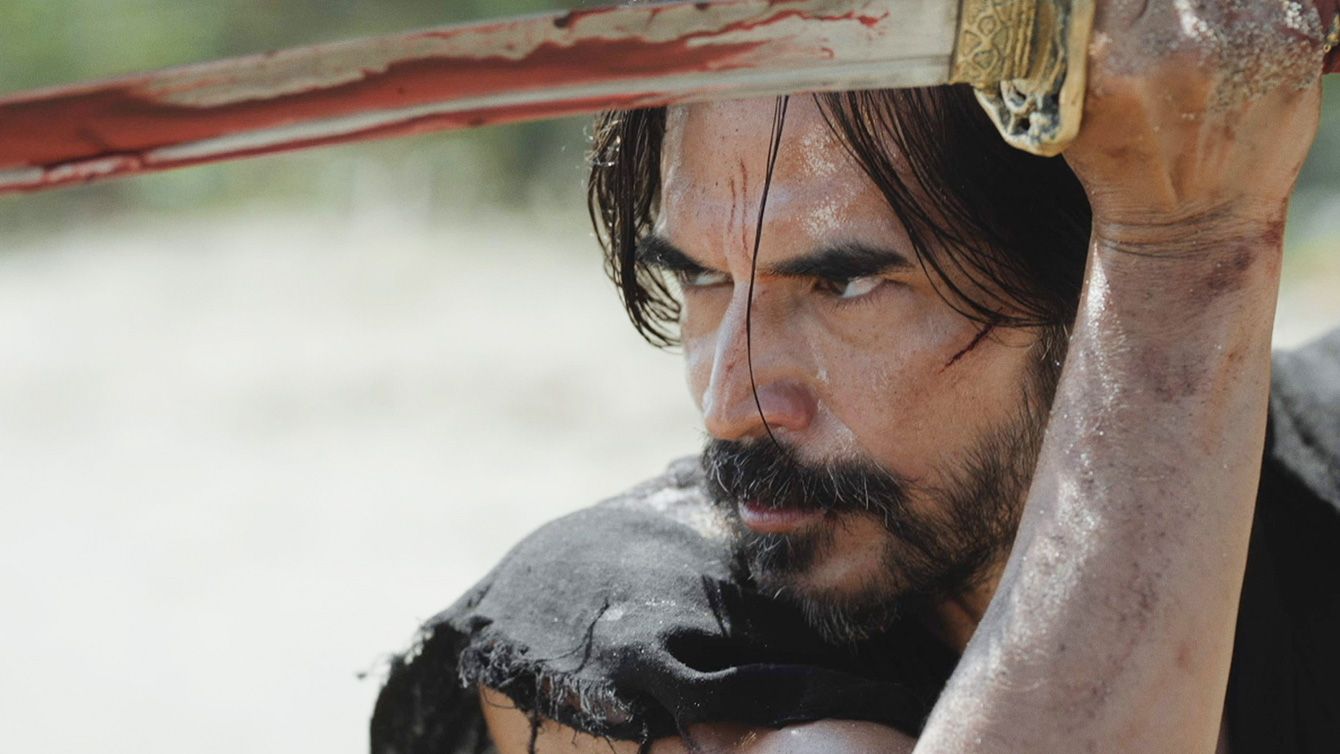
A standard haiku is anchored across the invocation of nature’s most ubiquitous objects and occurrences. Thunder, rain, rocks, waterfalls. Within the quick poems, the complexity of those photos, sometimes taken with no consideration, are plumbed for his or her depth to meditate on the conduct of humanity. A lot of the dialogue in Josh C. Waller’s Lone Samurai, heard in Riku’s voiceover (Shogen), are poetic trinkets, whereas the movie at massive takes the type of the simplistic image-making that defines the Japanese literary custom. Despair, grief, resilience, violence, glory, peace. All in a day’s work for a grasp swordsman.
Within the late thirteenth century, within the aftermath of Kublai Khan’s beating-back by a band of samurai, Riku wakes up on an deserted shoreline, his leg impaled by a picket stake. That motion is given to us by way of opening titles, and so our introduction to our intrepid hero could be very a lot by the lens of the movie’s literal title. Riku removes the stake as finest he can with out instantly bleeding out. Carrying round this huge, open wound, he encounters the ghosts of his previous on this seemingly abandoned land with all of its forests, valleys and crashing waterfalls reworking right into a twisted and delightful funhouse of reverie and horror.
Lone Samurai is, Satirically, Finest When Not Centered on the Motion.
As Riku traverses this attractive however solitary world, he has visions of his kids and of his spouse, Military (Sumire Ashina) — all of whom are, presumably, misplaced. Waller’s depiction of Military is exceedingly foolish, falling because it does into the trope of Wistful Lifeless Spouse Syndrome that has pervaded so many different motion movies that belong to the unofficial “Dude’s Rock” style. However the movie stays in its lane for probably the most half, and, regardless of this being a movie billed as “samurai versus cannibals,” it’s truly at its finest earlier than the preventing begins.
Twice, Riku is about to commit ritualistic seppuku when he’s interrupted. The primary, on the sight of a mountain; the second, by a rock to the pinnacle. Captured by a cannibalistic, cultish clan, Riku is thrust right into a disturbingly violent world that he should escape from. Which, he does, and pretty simply. He is a samurai, they’re remoted cannibals, it is not precisely an excellent match.
The motion right here is choreographed by a number of the similar folks behind The Raid, and certainly a whole lot of it’s as kinetically charged as these movies with an identical, backed-into-the-corner, self-contained thrill. However Weller would not movie all of it that properly, reducing away at inopportune moments that do not let Shogen’s martial arts means shine by. And, as a result of Riku so overpowers the opposition, there simply is not a lot stress to carry on to.
The movie’s most troublesome high quality, nonetheless, is its implied sociological politics. Contemplating Japan’s colonial historical past of Indonesia, it’s onerous to flee the optics of a civilized Japanese man mowing down scores of barbarian Indonesians. It feels just like the clueless alternative of a white director on a set occupied by communities he would not belong to, and it casts a darkish pallor over the majority of the movie.
Unusually, the movie would in all probability have been finest as a type of Solid Away-style survival movie, as a result of as quickly because it strikes from the distinctive tranquility of the primary third to the nauseating violence of the final two thirds, it loses all of the majesterial high quality it had constructed up. Like Zatoichi, Lone Samurai succeeds because the story of an untraditional, loyal-to-a-fault warrior, however maybe Riku wants extra meat to chew off subsequent time.