Even essentially the most iconic film franchises typically produce a film that feels utterly indifferent from what got here earlier than or after. Generally it is because a collection remains to be discovering its id; different instances it’s the results of inventive experimentation, tonal shifts, or altering viewers expectations. Whether or not for higher or worse, they really feel like oddities when seen alongside their sibling installments.
Importantly, a film not becoming its franchise isn’t inherently a criticism. In actual fact, among the most fascinating entries in long-running collection are those that really feel out of step, both pushing boundaries or reacting in opposition to established formulation. These movies typically stand out as a result of they emphasize totally different genres, tones, or storytelling priorities than the remainder of their franchises.
Mission: Not possible 2 (2000)
Mission: Not possible 2 feels prefer it belongs to a completely totally different franchise than the movies that adopted it. Directed by John Woo on the top of his Hollywood motion period, the film is aggressively stylized. It’s cartoonish, and soaked in sluggish movement.
Mission: Not possible 2 launched franchise staples like voice-changing tech, masks misdirection, and Ethan Hunt’s love of bikes. Nonetheless, it leans far tougher into exaggerated motion than espionage. Doves, spinning kicks, and melodrama dominate the display screen, typically on the expense of rigidity or realism.

Mission: Not possible 9 Appears Extra Doubtless After Tom Cruise’s House Film Was Scrapped
Tom Cruise’s post-Mission plans have not gone as anticipated, and his area film’s cancellation paves the way in which for Mission: Not possible 9 to occur.
In fact, the movie arrived whereas the franchise was nonetheless defining itself. But in hindsight it feels wildly misplaced in comparison with the grounded, precision-driven entries that got here later. MI:2 is an ideal early-2000s blockbuster time capsule, full with a now-legendary Limp Bizkit theme track blasting its extra proudly.
Halloween 3: Season Of The Witch (1982)

Halloween 3: Season of the Witch is notorious exactly as a result of it has virtually nothing to do with the remainder of the franchise. There’s no Michael Myers, no slasher construction, and no continuation of Laurie Strode’s story. As an alternative, the movie is a wierd, eerie folk-horror sci-fi hybrid centered on cursed masks and pagan conspiracies.
Its fame suffered largely as a result of audiences anticipated one other Michael Myers film, not an anthology experiment. John Carpenter initially envisioned Halloween as a collection of standalone horror tales. Introducing Myers once more in Halloween II cemented expectations too rapidly.
Consequently, Season of the Witch was met principally with confusion. Considered by itself phrases, Season of the Witch is extra fascinating and atmospheric than its fame suggests. Nonetheless, inside the context of the Halloween franchise, it seems like an enchanting however jarring detour.
The Quick and the Livid: Tokyo Drift (2006)

The Quick & Livid franchise has successfully cut up into two eras: early car-culture movies and later globe-trotting heist spectacles. Tokyo Drift exists awkwardly between them. For years, it functioned as a standalone entry, with new characters, a brand new setting, and minimal connection to the broader franchise mythology.
Its give attention to drift racing and underground automotive tradition aligns properly with the primary two movies. Nonetheless, because the collection developed into superhero-level motion, Tokyo Drift grew to become an outlier. Later makes an attempt to fold it again into continuity helped, however the tonal hole stays apparent.
In comparison with the team-based, family-driven narratives that outline the franchise right this moment, Tokyo Drift feels smaller, stranger, and extra area of interest. That distinction is precisely why it stands out so sharply inside the collection. It doesn’t really feel prefer it matches into both period, regardless of retroactive modifications.
Logan (2017)

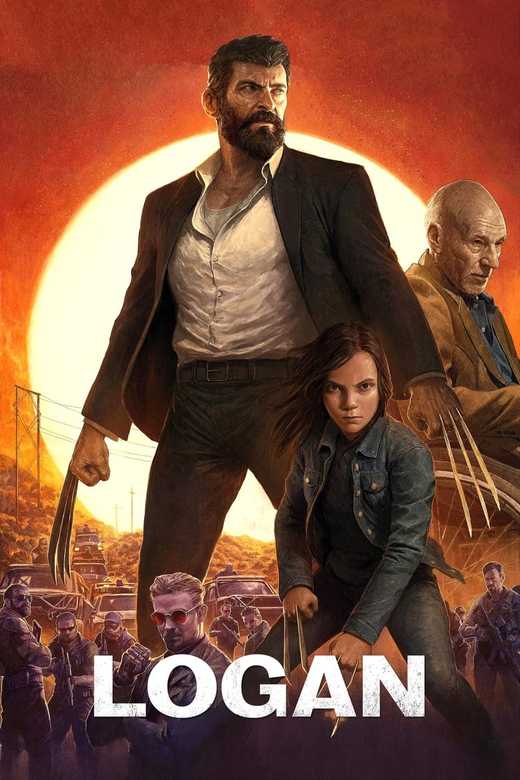
Logan doesn’t merely really feel totally different from different X-Males films – it actively distances itself from them. The movie embraces a bleak, grounded, R-rated tone that strips away superhero gloss in favor of uncooked character research. Violence is brutal, themes are heavy, and optimism is scarce.
Cleverly, the film treats the X-Males as a sort of fictional fable inside its personal world. This enables Logan to touch upon and detach itself from earlier entries. This tonal separation makes Logan really feel much less like a franchise installment and extra like a standalone neo-western.
Whereas drastically totally different from the remainder of the collection, it’s arguably higher for it. Logan proves that not becoming a franchise can typically be a energy. It delivers some of the acclaimed superhero movies ever by rejecting acquainted formulation totally.
Ant-Man and the Wasp: Quantumania (2023)

Ant-Man and the Wasp: Quantumania is so disconnected from the earlier Ant-Man films that it appears the MCU forgot what made Ant-Man interesting within the first place. The primary two movies thrived on size-based humor, lighthearted tone, and modest, heist-style stakes. Quantumania abandons all of that in favor of dense lore and franchise setup.
Quantumania is designed primarily to launch the now-defunct Avengers: The Kang Dynasty. The humor is muted, the plot generic, and the setting overwhelmingly CGI. There are virtually no memorable moments constructed round shrinking or rising, making the Ant-Man id really feel irrelevant.
In actual fact, practically any MCU character could possibly be swapped into the story with minimal modifications. By prioritizing future franchise plans over character-driven enjoyable, Quantumania finally ends up feeling like a generic sci-fi film slightly than a real Ant-Man sequel. It lowered a singular and compelling sub-franchise to a generic computer-generated sci-fi movie.
Alien Vs. Predator (2004)

Alien vs. Predator has a uniquely uneven influence as a result of it impacts every franchise in reverse methods. Inside the masterpiece Alien collection, the movie seems like a step down, changing slow-burn dread and physique horror with loud, effects-heavy motion. The xenomorphs lose a lot of their menace after they’re handled as cannon fodder slightly than unstoppable nightmares.
Nonetheless, for the Predator franchise, AVP arguably works much better. The xenomorphs lastly give the Predator a worthy, visually placing opponent that justifies the species’ obsession with looking. Watching Predator tradition conflict with the Alien lifecycle feels conceptually sound, even when execution falters.
As a crossover, AVP doesn’t actually belong to both franchise’s tonal id. It cheapens Alien’s horror legacy whereas concurrently elevating Predator by giving it the proper adversary. As the fashionable Predator franchise evolves into extra prestigious cinema, AVP feels evenmore like an anomaly.
Mad Max (1979)

The unique Mad Max barely resembles the franchise it launched. In comparison with the operatic chaos of The Highway Warrior, Past Thunderdome, and Fury Highway, George Miller’s first movie is remarkably restrained. It’s basically a gritty, low-budget revenge thriller set on the sides of societal collapse.
Mad Max is strikingly faraway from the full-blown wasteland spectacle audiences now affiliate with the collection. Automobile chases are intense, positive, however they’re grounded in some sense of realism. The post-apocalyptic components are additionally a lot extra refined than the exaggerated dystopian sequels.
By Mad Max 2, the franchise had already developed right into a heightened, virtually cartoonish imaginative and prescient of violence and mythology. Because of this, the unique Mad Max now feels oddly tame and grounded in hindsight. Regardless of beginning every part, Mad Max stands aside as a much more lifelike, intimate story than something that adopted.
First Blood (1982)

First Blood is the definitive Rambo movie. It’s additionally the one which least matches the franchise it created. Not like its sequels, First Blood will not be an motion spectacle however a somber character research about trauma and alienation.
John Rambo isn’t portrayed as an unstoppable hero, however as a deeply wounded Vietnam veteran pushed past his limits by systemic cruelty. The violence is sparse and infrequently tragic slightly than triumphant. Later movies remodeled Rambo right into a patriotic motion icon, specializing in heroics, physique counts, and spectacle.
Thematically, that is the precise reverse of First Blood, which is about struggling, PTSD, and the price of warfare. In hindsight, the franchise grew to become every part the unique movie quietly criticized. Because of this, First Blood is the outlier in its personal collection.
The Cloverfield Paradox (2018)

The Cloverfield Paradox feels disconnected exactly as a result of it was by no means meant to be a part of the franchise in any respect. The film was initially developed as a standalone sci-fi script titled God Particle. It was subsequently retrofitted into the Cloverfield universe late in manufacturing.
The earlier entrant was equally folded into the Cloverfield franchise. But, whereas 10 Cloverfield Lane efficiently discovered a intelligent thematic connection to the unique, Paradox stretches credulity. It leans closely into pure science fiction, abandoning the grounded horror and thriller that outlined the franchise.
J.J. Abrams’ multiverse clarification, utilizing a particle accelerator accident to justify timeline fractures, feels extra like harm management than natural storytelling. The result’s a movie that explains an excessive amount of whereas which means too little. By providing an underwhelming wormhole-based origin for the unique monster, Paradox finally ends up diluting slightly than enriching the franchise.
Star Wars: The Final Jedi (2017)

The Final Jedi stands other than the Star Wars saga in tone, aesthetics, and philosophy. Visually, it’s darker and extra stylized, with lighting and framing that really feel deliberately un-Star Wars. Narratively, it actively contradicts or dismisses many setups from The Pressure Awakens.
This has earned its fame as a divisive, “anti-trilogy” installment. Notably, Rian Johnson’s cynical interpretation of Luke Skywalker sharply diverges from the character’s conventional portrayal. It reframes him as an emblem of failure slightly than hope. Most strikingly, the movie critiques nostalgia in a franchise sustained by it.
The Final Jedi repeatedly urges audiences to let go of the previous. Despite the fact that The Pressure Awakens was largely an train in recreating the unique trilogy’s most iconic scenes. This thematic insurrection, mixed with tonal shifts like meta humor that borders on Spaceballs, makes The Final Jedi really feel like a deliberate disruption slightly than a pure continuation of the saga.
-
Logan

8/10
- Launch Date
-
March 3, 2017
- Runtime
-
137 Minutes
-

Alien vs. Predator
3/10
- Launch Date
-
August 13, 2004
- Runtime
-
100 minutes
-

-

Lance Henriksen
Charles Bishop Weyland
-

Mad Max
- Launch Date
-
April 12, 1979
- Runtime
-
91 minutes
-
Joanne Samuel
Jessie Rockatansky
-

-

First Blood
- Launch Date
-
October 22, 1982
- Runtime
-
93 minutes