

The Bride!, like Hamlet, begins with a knock-knock joke. A ghost seems, and talks of being trapped by a narrative that has festered in her mind, like a tumor, for hundreds of years. That is Mary Shelley (Jessie Buckley), spotlit and crass, sullen but forceful, talking on to the viewers, about to own the physique of a girl about to die: Ida, the mistress to a mobster (John Magaro). As Ida swirls an umpteenth martini in a bar in Thirties Chicago, she out of the blue, violently, jitters and thrusts, alternating between a British and an American dialect, exploding with accusations of homicide and abuse. She appears at a fellow girl on the desk and says to her, quoting Bartleby the Scrivener: It is okay to say, “I want to not.” You do not have to provide into the whims of grabby males. Moments later, she is killed, for talking the reality to literal energy.
Maggie Gyllenhaal’s second function is an explosive illustration of social disruption. A screaming cry of a movie, The Bride! makes use of its literary and filmic influences – Hamlet, Romeo & Juliet, Bartleby, Bonnie & Clyde – to belt a clarion name towards upper-crust hedonism, police complicity, violence towards girls, and the patriarchal system that binds all of them. It shouts its message in righteous anger and in gallows humor, but, in the end, The Bride! is a supremely romantic movie about selecting to dwell even within the face of sure loss of life. Higher to be mortal and in love than immortal and lonely. A selection that each one of us, wealthy or poor, appear to be dealing with now, practically 100 years after the occasions of Gyllenhaal’s brazen, lovely, thrilling romance.
The Bride Repurposes Mary Shelley’s Novel As a Feminist Clarion Name
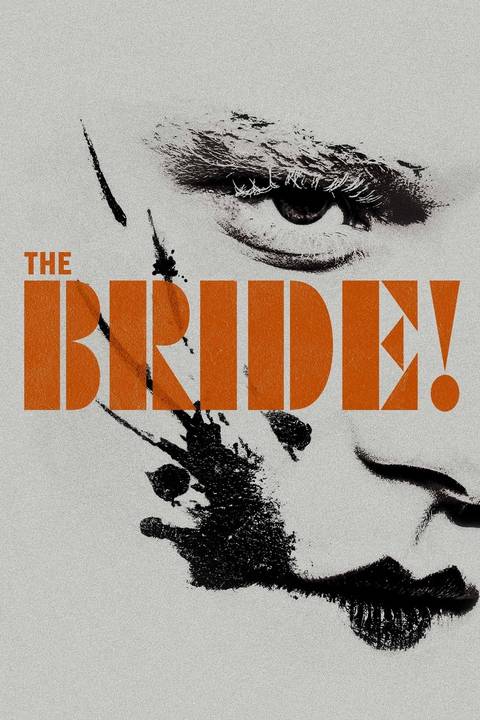
Who higher to heed the decision of that imaginative and prescient than Jessie Buckley, whose fastidiously managed histrionics in Hamnet had already solidified her as one in all Hollywood’s most emotionally accessible performers? Successfully pulling triple responsibility in the identical physique as Shelley, Ida and somebody wildly in-between the 2, Buckley alternately contorts and softens her physique in unpredictable outbursts. With a face and physique tattooed by the Rorschach-like splatter of black liquid used to reanimate her physique by Dr. Euphronius (Annette Bening), The Bride rattles the world by her mere existence.
Her kindred spirit, Frankenstein’s monster, aka Frank (Christian Bale), is much less her soulmate than the soft-hearted man whose loneliness could actually be killing him, and who occurs to pluck her physique from a pauper’s grave. At 111 years previous, Frank longs for a companion, and, regardless of some early protestations, Euphronius rapidly turns into the collaborator on the mission to provide him a mate. Like so many ladies’s existences earlier than her, The Bride lives and dies (or is it dies after which lives?) based mostly on the whims of the boys in her sphere.
Upon waking, nevertheless, The Bride remembers little or no. How she received there for one, and what her title is, although Mary Shelley’s voice is loud inside her compromised mind. Frank obscures a lot of the fact, and Euphronius is barely joyful to oblige, as they each persuade her they had been betrothed earlier than an accident. And, seemingly content material with this data but desperate to expertise the world, she bursts into the underground nightlife of prohibition Chicago, filmed with noir-like chiaroscuro by Lawrence Sher. She writhes arrhythmically at a queer dance membership as Frank watches from afar, seemingly joyful to observe as she explores her new, re-animated physique, within the purple haze of a bootleg area.
However, issues go haywire quick, and let’s simply say that Frank’s quiet anger is unleashed in a big method. Quickly, the romantic heroes are on a harmful mission to outrun the police, led by a really totally different duo: John and Myrna (Peter Sarsgaard and Penélope Cruz, respectively), presenting a really totally different type of imaginative and prescient of male-female relations in an especially gendered time. Yet one more such duo graces the screen-within-the-screen, Frank’s celeb obsession, the Fred Astaire-like Ronnie Reed (Jake Gyllenhaal) and his Ginger Rogers-esque accomplice (Julianne Hough).
By way of these catastrophically totally different souls, Gyllenhaal appears to be exploring the ways in which our understandings of one another and of ourselves emanate by means of the texts we devour. Frank’s understanding of romance and masculinity comes from the films; Ida’s understanding of political energy, maybe, from the books inside her mind; a whole police power siloed by preconceptions of femininity. The entire movie’s most important characters are in a continuing battle to take inventory of their very own participation — or lack thereof — in a cravenly corrupt world.
Gyllenhaal is tackling a lot an excessive amount of on this cranked adaptation of The Bride of Frankenstein. The movie is usually pulled between its thematic revelations and its obligations to plot, and there is a lot to cowl and a whole lot of characters to service. However that is okay; she’s offended at a society that continues to berate the othered plenty for the conservatism of the remaining.
In utilizing her supply materials as successfully as she has, she pointedly questions the instincts of a society that refuses to acknowledge it should die, and in so doing, maliciously hunts for a scapegoat upon whom to position its misplaced anger. Within the movie’s most startling scene, a direct reference to Mel Brooks’ Younger Frankenstein, Frank and Ida crash Ronnie Reed’s get together and violently burst the bubble of the nouveau riche. It is a outstanding second of insubordination.
On this method, Bartleby feels just like the extra distinguished supply textual content than even Frankenstein. Herman Melville’s quick story tells of a Wall Avenue clerk who out of the blue, merely, decides to cease working. “I would like to not,” his oft-repeated chorus, a cogent defiance of the expectation of complicity. Maybe the largest revolution of all is the one which begins with a refusal to take part. Discover your individual method, discover out what being human means to you. Discover your individual monster.
The Bride! releases theatrically on March sixth, 2026.
- Launch Date
-
March 6, 2026
- Runtime
-
126 Minutes
- Director
-
Maggie Gyllenhaal
- Writers
-
Maggie Gyllenhaal
- Producers
-
Emma Tillinger Koskoff, Osnat Handelsman-Keren, Talia Kleinhendler, Maggie Gyllenhaal