

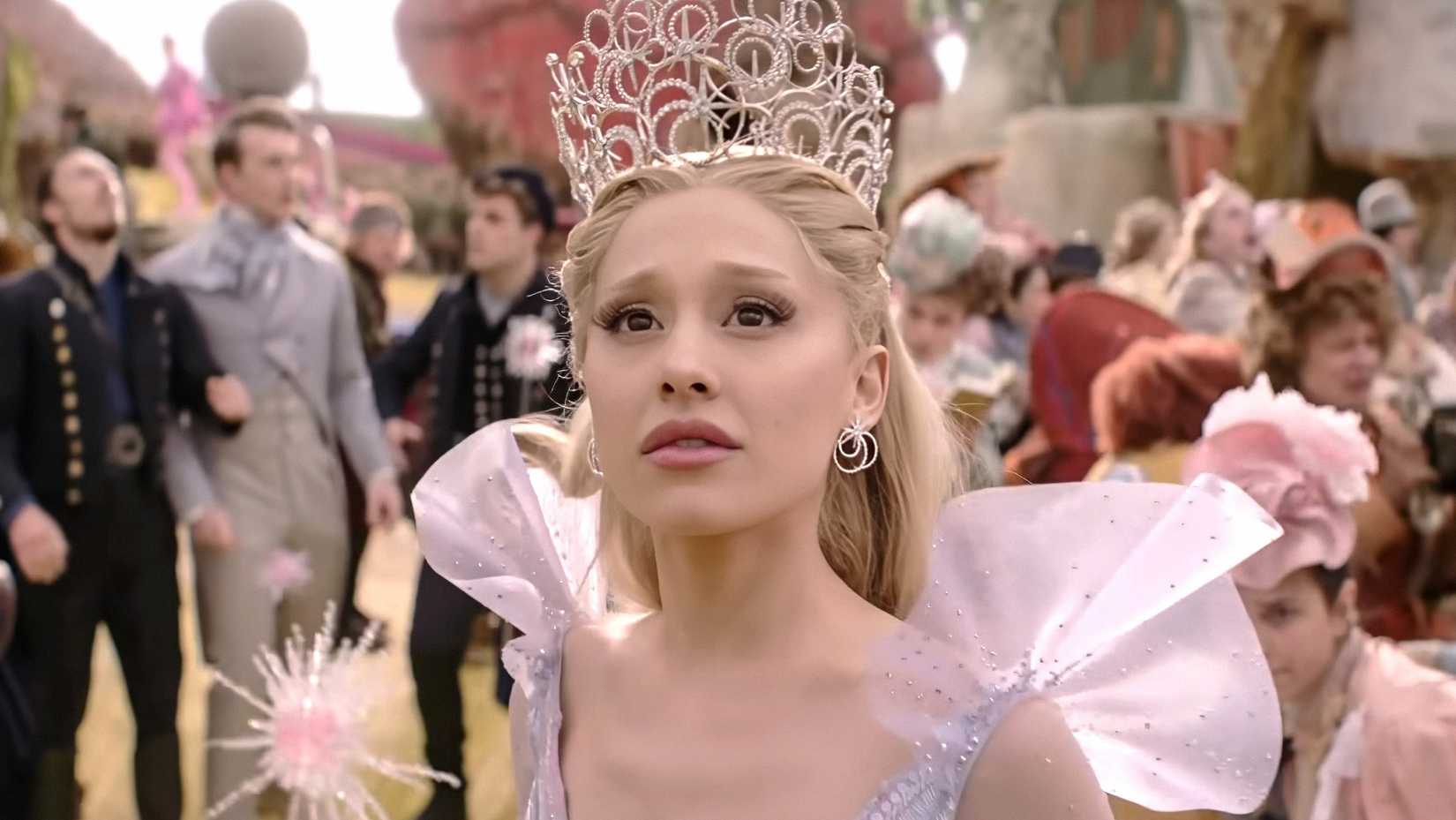
From when it was introduced, the choice to separate Jon M. Chu’s big-screen adaptation of Depraved into two films has sparked debate. On the macro stage, it smacked of a Hollywood pattern that sprung up after Harry Potter break up its closing guide into two movies, a call so profitable that seemingly each franchise finale adopted swimsuit. Audiences have grown so bored with this that tasks greenlit when it was modern have tried to cover their multi-part standing of their advertising (the primary Depraved included).
As a alternative for this particular venture, it additionally appeared questionable. Did a stage musical that runs below three hours (together with its intermission) actually need six hours to be advised on the massive display? Was it actually sensible to chop off Act I, which incorporates a lot of the most-acclaimed music and ends with the musical’s best-known music, from Act II?
Although the film has its detractors, Depraved: Half One was sufficient to present doubters pause. It was well-received by critics and audiences alike, turning its box-office success into ten nominations on the 2025 Oscars, tied for second-most; the filmmakers have been clearly onto one thing right here. Folks have been prepared to withhold judgment till the second movie got here out, with many speculating that Chu would take extra swings along with his adaptation to deal with the weaknesses traditionally related to the second half of the musical.
Now that Depraved: For Good has launched, the talk appears absolutely reignited. Important reception is weaker for this movie than its predecessor: 71% on Rotten Tomatoes and 58 on Metacritic, in comparison with Depraved‘s 88% and 73, respectively. Apart from a pair new songs and story beats, it is largely trustworthy to the supply materials, warts and all. Was the two-movie break up actually the only option?
For me, even with some room for critique, the reply is clearly sure.
Assessing Depraved’s Cut up Requires Trying Past Artwork vs. Commerce
There isn’t any doubt Common is happy with their resolution. The primary Depraved was a field workplace hit, particularly domestically, the place each the musical and The Wizard of Oz have the strongest cultural maintain. Per Deadline, Depraved: For Good has opened even stronger: $150 million home and $226 million world, in comparison with the primary film’s $112 million home and $164 million world. It stays to be seen whether or not Half Two can repeat Half One‘s spectacular maintain over Thanksgiving weekend, however with one other A CinemaScore, word-of-mouth will probably be simply as sturdy. In all chance, splitting the discharge will find yourself doubling the grosses.
However industrial wants aren’t to be confused with creative ones, and Depraved naysayers will argue the filmmakers privileged the previous on the expense of the latter. There’s advantage to that argument. I’ve little doubt that Depraved might have been made into one, good movie, with modifications made to swimsuit the story’s new format. I like brave diversifications that deal with their supply texts extra like inspiration than a recipe to be slavishly recreated, and whereas I like Depraved: For Good, I did query the aim of separating Act II if to not take it in a distinct route.
Nevertheless, I additionally suppose the prolonged runtime was vital to construct Elphaba and Glinda’s relationship to the place it must be. The connection between these characters (and the emotionality with which Cynthia Erivo and Ariana Grande carry out it) is Depraved‘s best energy, and the relative weak point of Act II stems partly from their extended separation. Combining the 2 movies dangers diluting the throughline that finally makes the second half of the story worthwhile.
In the long run, the creative deserves of the break up rely on one’s expertise, and hashing out these variations is a part of what makes criticism worthwhile. However, on this case, I feel the talk dangers dropping sight of the larger image.
The place of films in mainstream tradition is altering. In a world the place getting individuals into film theaters is tougher than ever, Hollywood has acknowledged it must “eventize” its tentpoles for them to interrupt by – but when the Barbenheimer phenomenon taught us something, it is that audiences finally resolve which movies are and should not occasions. Studios can have all of the pre-established IP cash should purchase, but when viewers sense something concerning the film is off, they simply will not go see it.
Typically, although, they simply want a bit of convincing. The 2-part gambit is dangerous – why spend the time seeing a “Half One” in theaters when you’ll be able to simply anticipate each elements to be streaming? – which is why studios attempt to conceal it in promo materials. However the result’s one thing completely different than simply making a success film and creating a sequel from scratch. If viewers like what they see and unfold the phrase, they’re going to grow to be invested in this story reaching its conclusion. By the point Half Two rolls round, it will be a full-blown second.
Each Chu and Dune director Denis Villeneuve have been open in interviews about their first movies being solely half the story, however because of trailers that conveniently left off the complete title card, a number of viewers members solely discovered this as soon as they have been already seated. Even so, each of these movies did it proper.
Films have a cultural perform that sits someplace between the creative and the industrial, and it is this component that makes me much less cynical about Depraved: For Good‘s existence. It is true that, as only one film, Depraved would not have made as a lot on the field workplace. But it surely additionally would not have been as large, and the trade wants large films to maintain moviegoing related.

- Launch Date
-
November 21, 2025
- Runtime
-
137 Minutes
- Director
-
Jon M. Chu
- Writers
-
Winnie Holzman, Dana Fox, Gregory Maguire
- Producers
-
Marc Platt, David Stone